

As the world grows more interconnected, your business would be reaching out to global markets, broadening their horizons and opportunities. However, when marketing and selling to an audience, you’ll need to present your campaigns in a language that the audience can understand. This calls for marketing translation if your marketing collateral is in a different language.
“Marketing translation is the process of adapting marketing materials, content, and campaigns from one language to another while ensuring that the message remains culturally relevant and impactful. It goes beyond simple linguistic conversion and involves understanding the target audience’s cultural nuances, preferences, and values” (Tridindia, 2023). It can involve the translation of your:
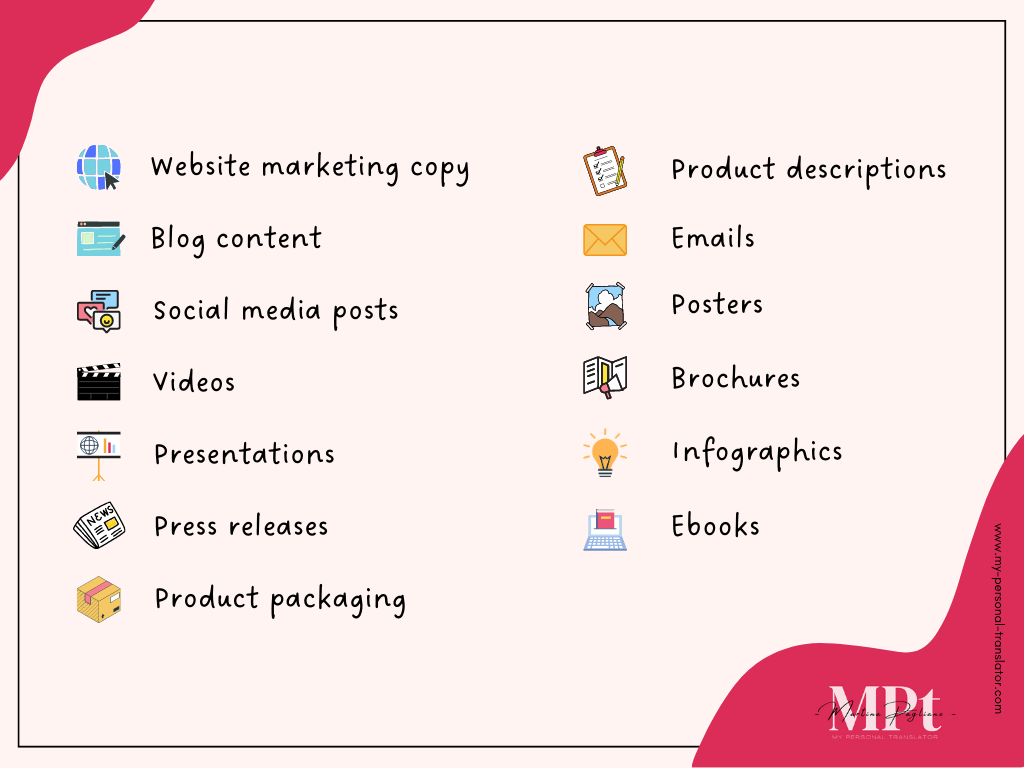
In other words, any marketing-related material, really!
They say that with marketing, you sell a feeling rather than a product. So, what you should really do is to make the audience feel like you made the product for them. And when that audience is from a different language and culture, a shift in mindset is required.
Before going on, let’s analyze some data.
From a business perspective, you might ask yourself why the translation of marketing content is so important. Especially when English is the most spoken language globally, with more than 1.5 billion native and non-native speakers, and allows you to reach a demographic as large as 1 in 7 of the world’s population.
Standardizing your marketing material, of course, may look like a good solution to save money, time, and resources as you can sell the same products and adopt the same advertising strategies across markets. Easy choice, right?
Well, not really. In fact, the latest translation statistics show that:
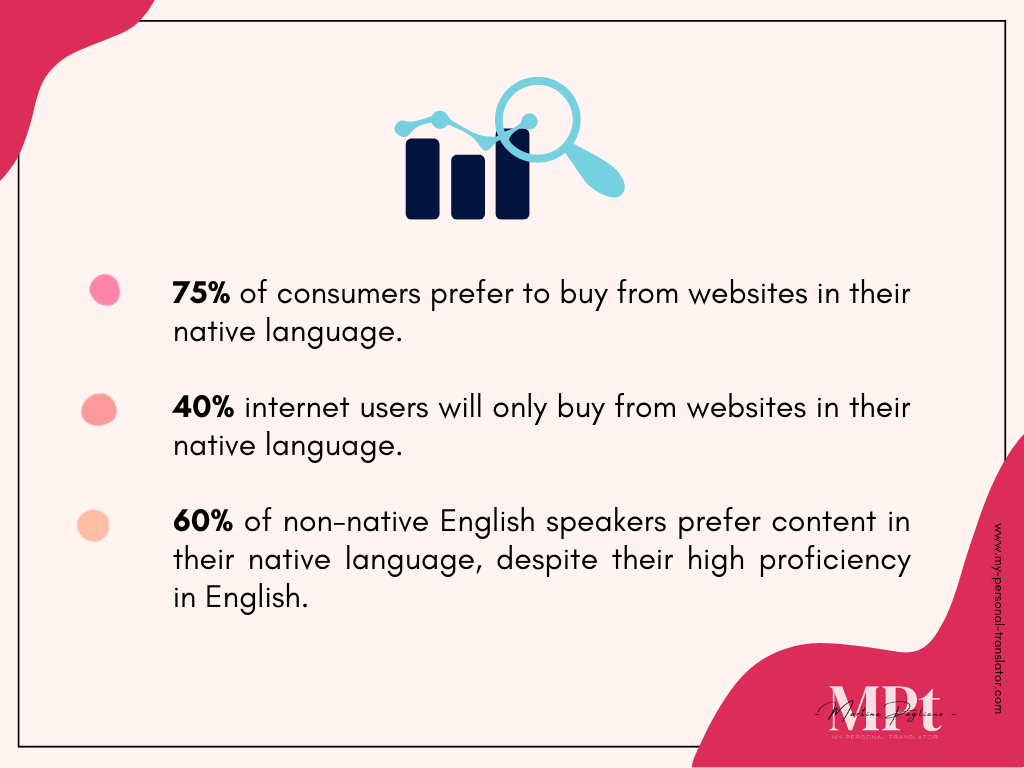
So, needless to say, an expert in marketing translation services is what you need. My tailor-made strategy will definitely help you boost your global reach, opening up new opportunities and addressing some of the challenges that internationalizing businesses have to face.
Relying on a professional marketing translator, your business will enjoy the following benefits:
- Enhanced market penetration
We cannot deny that language is a powerful tool in connecting with people. Translating your marketing content into multiple languages will allow your business to break language barriers and reach untapped markets, expanding their customer base and potential for growth. Moreover, it will help build a sense of inclusivity and connection.
- Cultural relevance and greater customer satisfaction
Cultural sensitivity is paramount in marketing. What works in one culture might not resonate in another. When customers can readily understand what you’re trying to tell them (aligning with their cultural context and avoiding misunderstandings or potential offense), they’ll have an easier time engaging with your business.
- Increased brand awareness and trust
Brands that communicate in their customers’ native languages demonstrate a commitment to understanding their needs and preferences. This fosters trust, loyalty, and long-term customer relationships.
- Boosted sales and revenues
A well-crafted marketing translation can significantly impact sales. It enables potential customers to fully comprehend the benefits and features of products or services, leading to higher conversion rates and increased revenue.
- Competitive edge
In today’s global marketplace, competition is fierce. Marketing translation provides a competitive edge by enabling businesses to effectively position their offerings in various markets and stand out from competitors.
A plus in your marketing strategy should be focusing on SEO and, thus boosting your rankings in the local search results. From a search engine optimization point of view, translating your web pages into certain languages can help them rank higher for searches conducted by users who want answers in these same languages.
However, the path towards success through marketing translation is not all lined with roses. Marketing translation is undoubtedly essential, but it comes with its set of challenges:
- Cultural adaptation
- Linguistic nuances, idiomatic expressions, and humor
- Consistency in brand voice across languages is critical
- Localization vs. Translation
- Time and costs
- Collaborating smoothly across projects and teams
Yeah it may sound difficult, but don’t panic! These challenges can be overcome by adopting the right strategies and best practices. We’ll talk about it in another article.
Sources:
 Martina Pagliano - My personal translator
Leave a comment